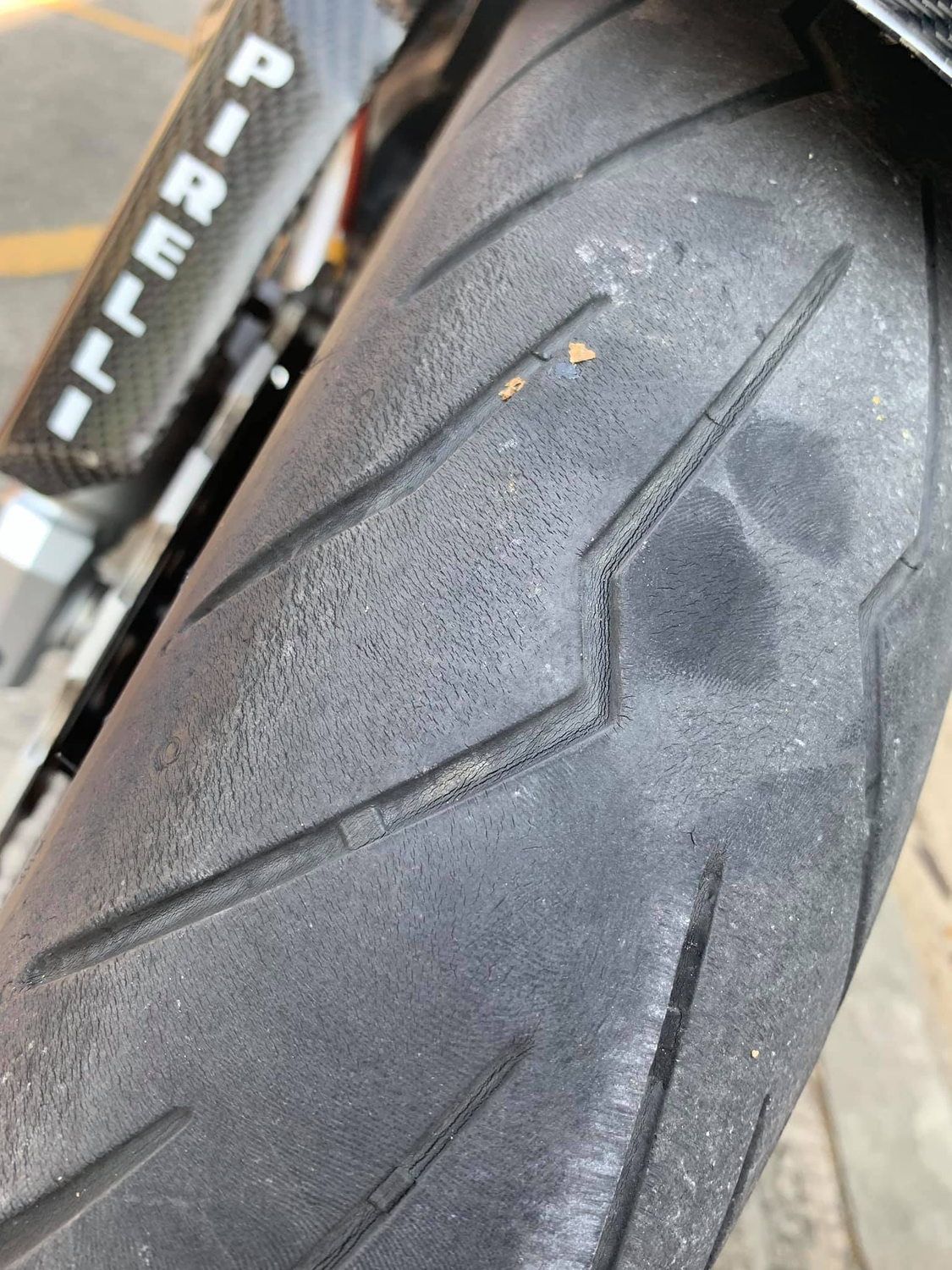
Cracking or “snake-skin” pattern across the entire tire surface
Cracking or “snake-skin” patterns across the entire tire surface may look alarming, but they're not as dangerous as they appear!
“Snake-skin” cracking appears on the tire surface as small cracks that spread widely. It can occur on any type of tire—cars, motorcycles, or bicycles—and is most commonly seen on tires that have been used for some time or installed but left unused for long periods (idle storage). These cracks gradually become more noticeable and are referred to as “aging.”
These cracks occur due to the expansion and contraction of the tire caused by constant changes in internal and external temperatures. Over time, the chemical compounds in the rubber gradually degrade, and the internal air pressure reacts with external factors, causing the rubber to dry, cracked, and aged. This is especially common in tires that are unused for long periods or on motorcycles, where cracks often appear in areas that see little contact, such as the tire shoulders. Older stock or long-stored tires are more prone to these surface cracks, but if the tire is used regularly, There is generally no issue.
Cracks or “snake-skin” patterns are not as dangerous as commonly thought. They only appear on the outermost layer of the tire and will gradually disappear as the tire is used in that area. What is more concerning is dry, deteriorated rubber: even if the tire hasn't been used, if it has been installed for a long time, the rubber may lose its ability to grip the road because the internal chemical compounds have degraded.
“The way to prevent or address this issue is to I use the motorcycle regularly., ensuring the tires are in frequent use.”


 FIT ON YOUR MOTO
 CYCLING VELO